




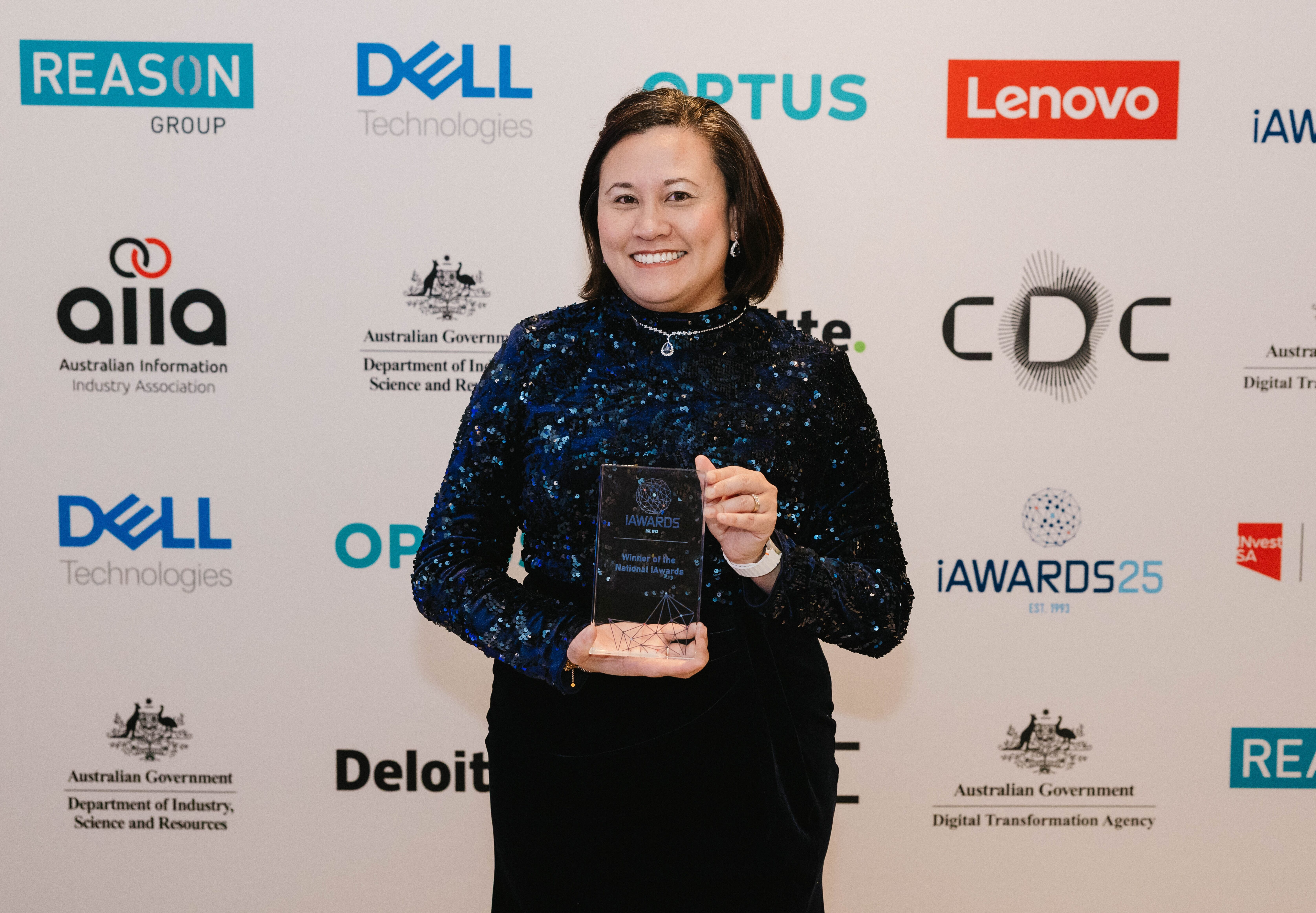
Drawing on a personal experience with postpartum depression and her scientific background, this iAward winner developed a world-first solution that could help up to one in 5 women feel better prepared for – and have a more positive experience of – motherhood.
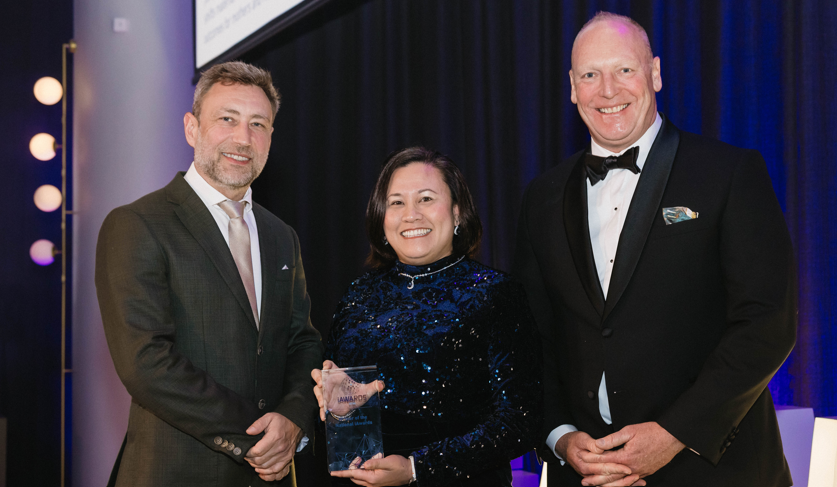
Clarissa and Ketim Co-founder Dr. Maciej Trzaskowski (left) receive the iAward from Greg Boorer (right), CEO of CDC and sponsor of the Start-up category.
For Clarissa Yates, pregnancy was a “very happy” time. Midwives would comment on her cheerful demeanour, and the depression screening questionnaire she completed showed she was not at risk of depression. But after the birth of her first daughter, Clarissa didn’t “feel great.” The experience after her second daughter was even more challenging. “It was like a brick wall suddenly coming down on me,” she recalls.
She was diagnosed with post-partum depression (PPD), also known as postnatal depression. Looking back, Clarissa realised she had also experienced it following her first birth. Depression and anxiety can affect up to one in 5 Australian new mothers. “The problem is that a lot of first-time mums don’t know what they’re feeling is real and so they don’t seek help for it.” Often by the time they do, their symptoms have become more difficult to manage.
Breaking new ground and winning the iAward Start-Up category
This experience, combined with a scientific career studying biochemical signalling pathways, inspired her to found biotechnology start-up Ketim Technologies two years ago. Ketim aims to transform mental health care by pioneering precision medicine for mental health. Since then, Clarissa and her team have developed the world’s first blood-based predictive test for PPD. The solution, PPD Early Risk Prediction, combines biomarkers and AI to forecast early risk of depression. Clarissa says this insight could help women, and their partners, identify early signs and put supports in place.
During development, Ketim ran a pilot test of 50 pregnant women and analysed certain protein biomarkers in blood tests. These results were then compared to PPD scores and resulted in a 94% chance of identifying true PPD cases from the control group.
“What we have shown is that there is a biological underpinning between mothers that end up having a high risk of depression.” Clarissa says understanding this biological link can help women see that post-partum depression is not a personal failure, reducing stigma and making it easier for them to seek support.
As a next step in the test’s development, Ketim will carry out clinical trials with larger sample sizes to help validate the results and refine the test, using AI to help read data and to generate more accurate analysis.
iAwards success leads to investment wins
Clarissa has enjoyed the “flow on of positive effects” of entering the iAwards. “I’ve got investors who have come on board based on the recognition of the awards I’ve won.” This includes new investors she met at the iAwards National Ceremony and those who now see her as a “leader” in this space.
As a start-up, she says the brand recognition is “more valuable than any marketing I could have done” and the entry process itself helped Clarissa focus on what her company has achieved and identify target markets. “Entering awards has made a significant difference through how I think about my business.”
“You need to be asking yourself the same questions the judges will ask,” she says. “Even if you don’t win, the process of refining your idea is worthwhile itself.”
Entries close Tuesday 7 April, 5pm
Note: Western Australian innovators enter the iAwards National competition through the state-based INCITE Awards.
Tasmanian innovators enter through the TasICT Awards.